




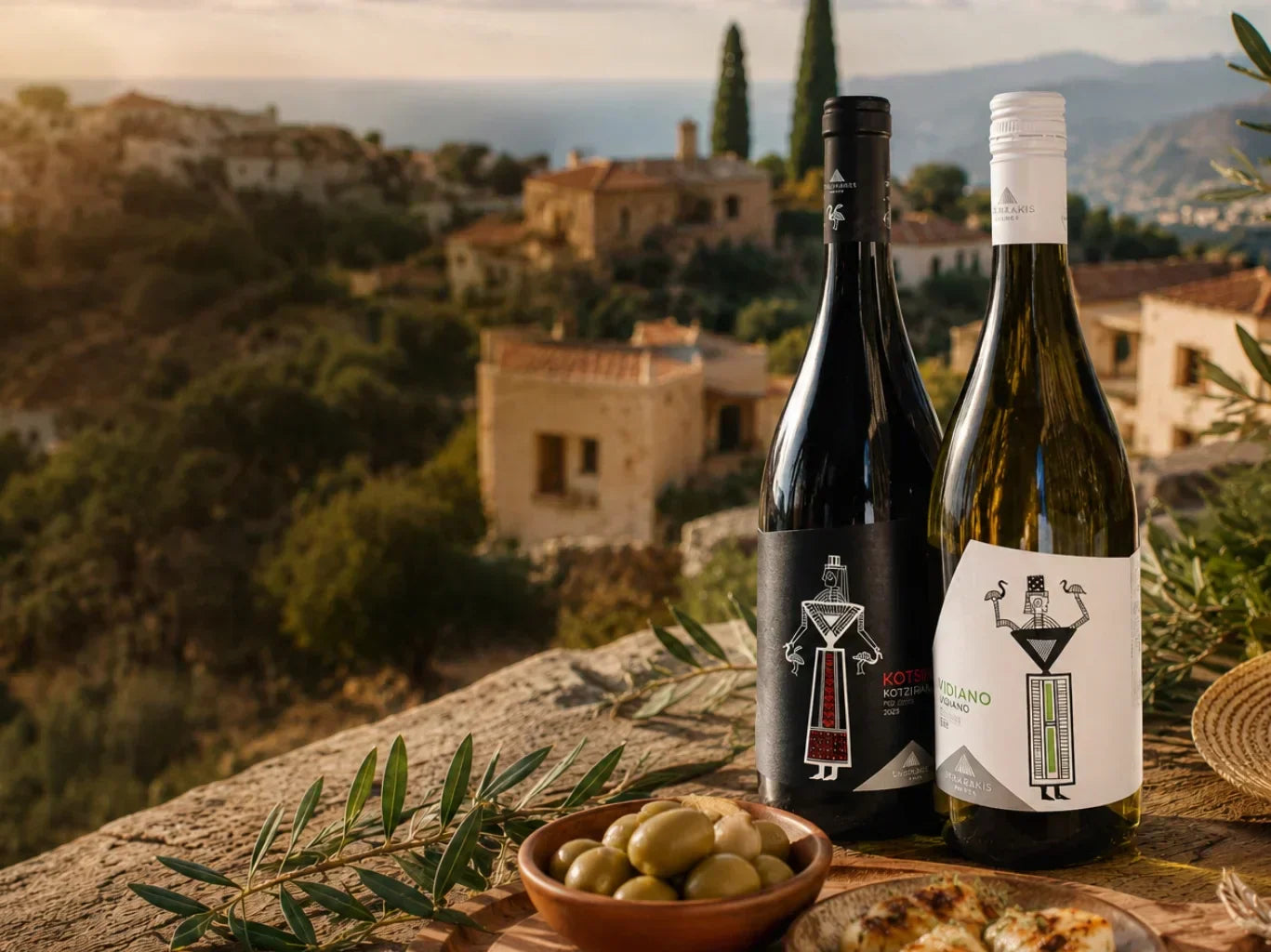

There's a good chance you've been to Crete - or know someone who comes back talking about it every summer. Long lunches by the sea, grilled fish, cold white wine in the sunshine, herbs growing wild in the hills.
For most people, Cretan wine is part of the holiday memory.
What's easy to miss is just how serious the island's wine scene has become.
That's where Lyrarakis comes in.
Featured in this article


They're one of Crete's most respected family wineries, making wines from indigenous grapes that barely exist anywhere else. They farm organically, work closely with small growers across the island, and - remarkably - helped save three native grape varieties from extinction.
Not metaphorically. Literally.
A Family Winery With Deep Roots in Crete
The story starts in 1966, in the village of Alagni, south of Heraklion, where brothers Manolis and Sotiris Lyrarakis founded the winery in the foothills of the Lassithi mountains.
For years, this was a proper local winery. Bottles were filled by hand and sold to nearby tavernas, neighbours and restaurants. Just Cretan wine made for the people around them.
Today, the second generation runs the estate, and Lyrarakis has become one of the leading names in modern Greek wine, championed by critics like Jancis Robinson and publications including Decanter.
But what we love most is that the wines still feel grounded. These aren't polished, anonymous international wines. They taste of where they come from.
The Family Who Refused to Let Crete's Grapes Disappear
In the 1970s and 80s, many of Crete's historic grape varieties were disappearing fast. International grapes were replacing them, old vineyards were being abandoned, and some native varieties survived only in tiny isolated plots.
The Lyrarakis family decided to go looking for them.
They travelled across Crete finding old vines and replanting rare indigenous varieties before they vanished entirely. Thanks to their work, grapes like Plyto, Dafni and Melissaki still exist in the modern wine world today.
Plyto, especially, has become part of the winery's identity. Lyrarakis released the first commercially bottled single-varietal Plyto in 1995, and this year marks the 30th vintage of that wine.
That's what makes these bottles feel special. They don't just tell the story of Crete - they helped preserve part of it.
Why These Wines Feel Different
One of the things we noticed straight away when tasting the range was how clearly each wine speaks for itself.
Lyrarakis specialise in single-variety, often single-vineyard wines. Rather than blending lots of grapes together into one house style, they let each vineyard and grape variety show its own personality.
The wines feel precise and fresh without ever feeling overworked. There's texture and depth, but also loads of drinkability - exactly what you want in summer wines.
The Grapes Worth Knowing
Vidiano: The One to Start With
If you try one wine from the range first, make it the Vidiano Queen.

Vidiano was once close to extinction before producers like Lyrarakis helped bring it back. Now it's become one of Greece's most exciting white grapes.
Think ripe peach, apricot, citrus and soft texture, but with enough freshness to keep everything bright and lively. If you enjoy Viognier or richer styles of Pinot Grigio, this is an easy way in.
It's brilliant with grilled seafood, salads, roast chicken or simply cold in the garden on a warm evening.
Vilana: Crete's Everyday White
Vilana is the island's most widely planted white grape, but in the right hands it becomes something much more interesting than a simple holiday white.
It's lighter and fresher than Vidiano, with lemon, green apple and subtle herbal notes alongside a gently chalky finish.
At 12.5% ABV, it's the sort of bottle that disappears very quickly over lunch.
Assyrtiko: Greece's Great White Grape
Most wine lovers know Assyrtiko from Santorini, where it produces some of the Mediterranean's most sought-after whites.
The Lyrarakis Voila Assyrtiko comes from high-altitude vineyards in eastern Crete, planted with vines originally brought over from Santorini decades ago.
What makes Assyrtiko so distinctive is the contrast between richness and freshness. You get texture and weight, but also razor-sharp acidity and a salty mineral edge.
If you love Chablis, Albariño or mineral-driven whites, this is well worth exploring.
Plyto: The Wine Nerd Bottle
Lyrarakis Plyto Psarades Vineyard is probably the wine that best captures the entire Lyrarakis story.
Without this family, there's a good chance most of us would never have tasted it.
The wine itself is fresh, citrus-driven and mineral, with white peach, quince and a really focused saline finish. It feels rare because it is rare.
Only tiny amounts are produced, and the 2025 vintage marks 30 years since Lyrarakis first bottled it commercially.
This is the bottle for curious drinkers, Greek wine fans, and anyone who loves discovering grapes they've never tried before.
Kotsifali: A Proper Summer Red
Red wine in summer can be difficult. Too heavy and it feels tiring. Too light and it loses character.
Lyrarakis Kotsifali 'Queen' gets the balance right.

Bright red fruit, gentle spice, soft tannins and enough freshness to take a light chill beautifully. If you enjoy lighter styles of Beaujolais or elegant Pinot Noir, this is a really good alternative with something slightly wilder and more herbal underneath.
Serve it lightly chilled with grilled lamb, charcuterie or smoky barbecue food and it really comes alive.
Sustainability At Work In The Vineyard
A lot of wineries talk about sustainability now. Lyrarakis back it up with real long-term work.
The estate has been fully organic since 2020, but what impressed us most is how connected everything feels.
They compost grape skins and olive waste to feed the vineyards naturally. Most sites are dry-farmed and hand-harvested. New vineyards are being planted at higher altitude to help preserve freshness as temperatures rise.
They also work with more than 100 independent growers across Crete, helping support small-scale farming on the island rather than replacing it.
It feels practical, thoughtful and long-term - not just something added to a label.
Where to Start With Lyrarakis
- New to Greek wine? Start with the Vidiano Queen
- Love Chablis or mineral whites? Try the Voila Assyrtiko
- Looking for something genuinely rare? Plyto Psarades
- Want a chilled summer red? Kotsifali Queen
- Rosé drinker wanting something different? Kedros Liatiko Rosé
Why We're Excited About These Wines
Most people first drink Cretan wine on holiday. Very few realise how good it can be until they taste bottles like these.
That's what makes this range exciting for us.
The wines are distinctive without being difficult. They're rooted in place, full of character, and genuinely enjoyable to drink. Some are easy everyday bottles. Others are the kind of wines wine lovers get excited about because they can't easily find them elsewhere.
But all of them feel authentic to Crete.
And for summer drinking - sunshine, seafood, sharing bottles outdoors with friends - we can't think of a better place to start.






Leave a comment (all fields required)